
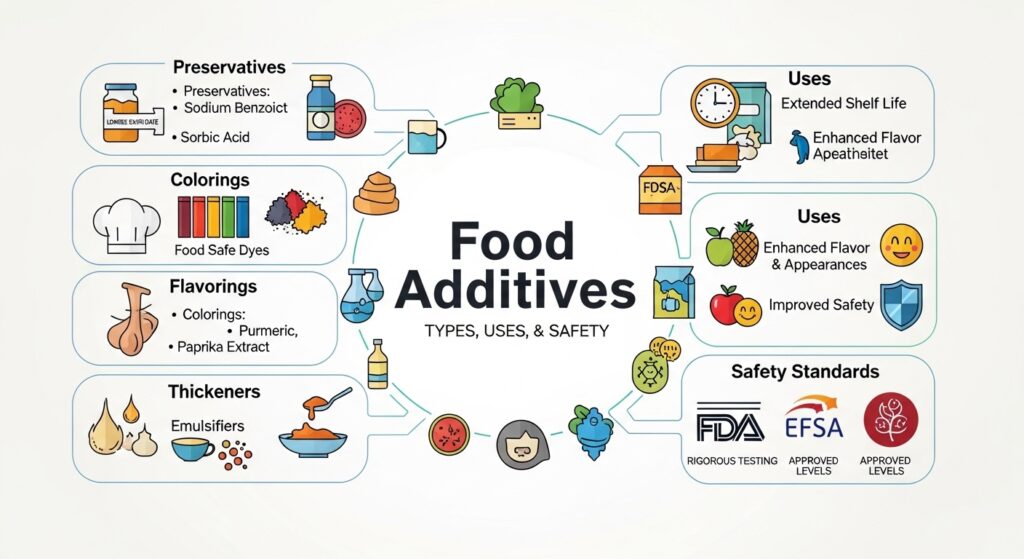
Food additives are an essential part of modern food processing, helping improve taste, texture, shelf life, and overall product quality. From packaged snacks to beverages and ready-to-eat meals, food additives play a crucial role in ensuring food remains safe, appealing, and consistent.
With increasing consumer awareness about food safety and ingredients, understanding food additives, their types, uses, and safety standards has become more important than ever.
What Are Food Additives?
Food additives are substances added to food products to enhance their quality, stability, flavor, or appearance. These additives may be natural or synthetic and are used in small quantities during food processing or storage. They are commonly used in:- Packaged foods
- Beverages
- Bakery products
- Dairy items
- Processed and frozen foods
Types of Food Additives
Food additives are categorized based on their function in food products.1. Preservatives
Preservatives help prevent spoilage caused by bacteria, yeast, and molds.Examples:
- Sodium benzoate
- Potassium sorbate
- Sulfites
Function:
- Extend shelf life
- Maintain freshness
- Prevent microbial growth
2. Sweeteners
Sweeteners are used to provide sweetness in food and beverages.Examples:
- Sorbitol
- Stevia
- Aspartame
Function:
- Replace sugar
- Reduce calorie content
- Improve taste
3. Colorants
Color additives improve the appearance of food products.Examples:
- Natural: Turmeric, beetroot
- Synthetic: Food dyes
Function:
- Enhance visual appeal
- Restore natural color lost during processing
4. Flavor Enhancers
Flavor enhancers improve the taste and aroma of food.Examples:
- Monosodium glutamate (MSG)
- Yeast extracts
Function:
- Boost flavor
- Improve taste profile
5. Emulsifiers and Stabilizers
These additives help maintain consistency and prevent separation.Examples:
- Lecithin
- Xanthan gum
- Carrageenan
Function:
- Improve texture
- Maintain uniformity
6. Thickeners
Thickeners increase viscosity and improve texture.Examples:
- Cornstarch
- Pectin
- Agar-agar
7. Acidulants
Acidulants control acidity and enhance flavor.Examples:
- Citric acid
- Lactic acid
Uses of Food Additives in Food Industry
Food additives serve multiple purposes beyond just improving taste.1. Shelf Life Extension
Preservatives help keep food safe and fresh for longer periods.2. Taste Enhancement
Sweeteners and flavor enhancers improve the overall taste of food.3. Texture Improvement
Emulsifiers and thickeners provide better consistency and mouthfeel.4. Appearance Enhancement
Colorants make food visually appealing and attractive.5. Nutritional Enhancement
Some additives are used to fortify food with essential nutrients.Safety Standards for Food Additives
Food additives are strictly regulated to ensure consumer safety.1. Regulatory Authorities
Food additives must comply with international standards set by:- FSSAI (India)
- FDA (USA)
- EFSA (Europe)
- WHO & FAO (Codex Alimentarius)
2. Approved Usage Limits
Each additive has a defined acceptable daily intake (ADI), ensuring safe consumption levels.3. Labeling Requirements
Manufacturers must clearly label additives on food packaging, ensuring transparency.4. Quality Testing
Food additives undergo strict testing for:- Purity
- Safety
- Stability
Benefits of Food Additives
1. Improved Food Safety
Prevent contamination and spoilage.2. Longer Shelf Life
Reduce food waste and improve storage.3. Better Taste and Texture
Enhance overall eating experience.4. Convenience
Enable production of ready-to-eat and processed foods.5. Cost Efficiency
Help manufacturers maintain consistency and reduce losses.Are Food Additives Safe?
Yes, food additives are safe when used within approved limits. Regulatory authorities ensure that all additives undergo rigorous testing before approval. Consumers should:- Read labels carefully
- Choose certified products
- Avoid excessive consumption of processed foods
Importance of Choosing the Right Food Additive Supplier
Selecting a reliable food additive supplier and exporter is crucial for ensuring product quality and compliance. A trusted supplier offers:- Certified and high-quality ingredients
- Compliance with global standards
- Consistent supply chain
- Competitive pricing